
Bento no. 3: Spicy Korean-flavor noodles under 300 calories, for the 'day after'

(click image to see larger version)
Bento contents:
- Shirataki noodles, 1/2 to 1 pack (5-10 calories or so!)
- Firm tofu, 1/2 block (about 90-100g) (100 calories)
- Kochujang (Korean red bean paste) based marinade (10 calories)
- Chopped up vegetables of your choice - green onions, garlic chives, ginger, garlic, peppers, cabbage, spinach, etc, with sesame oil (150 calories approx.)
- A small apple (50 calories)
Total calories (approx.) for the noodles only: 270 calories; including the apple: 320 (how calories are calculated)
Time needed: 20 minutes
Type: Asian-fusion with mainly Korean flavors
This bento has a lot of things going for it: it's low in calories, meat free, low-carb (though not gluten-free since there is a little wheat in the sauce), high in fiber with lots of vegetables, and of course quick and easy to make. Best of all, it's very spicy and tasty and doesn't taste like 'diet food' in any way. I like to make this on days after I've overindulged. It's great to have a bento like this occasionally to adjust your intake during the holiday season. It's also a great "clean up the fridge" kind of recipe since you can add any vegetables that need to be used up.
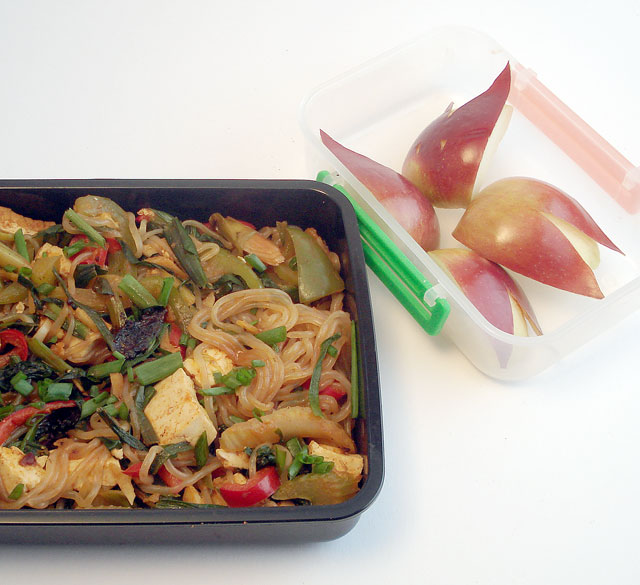 The magic ingredient as it were is the shirataki noodles, which I've written about in detail previously. It's become quite popular apparently in the U.S. as a diet food, but it's been around for hundreds of years in Japan. It is basically devoid of any nutritional value except for fiber. Here a lot of vegetables, a little oil, and tofu are added so the nutritional value of the dish overall is pretty good. (See notes at the end of this article about "Tofu Shirataki".) Chew slowly for maximum 'filling' effect.
I've added an apple cut into _usagi ringo_ (bunny apples) but if this is too much work, just pack a whole apple.
Ingredients
Per person (double the amount for two):
- 1 small (200g or 8oz) pack of shirataki noodles (more if you like - it doesn't really matter since it's so low in calories!)
- 1/2 block firm tofu (about 3 1/2 oz or 100g but just cut it in half and don't worry about weighing)
- 1 garlic clove
- 1 walnut-sized piece of fresh ginger
- Green onions
- Garlic chives (nira) if available
- Vegetables of your choice - here I used red and green peppers, a rather limp celery stalk, and a big handful of baby spinach leaves
- 1 level tablespoon (more if you want it really spicy) kochujang (see notes below)
- 1 tsp soy sauce
- 1 tsp mirin
- 1 tablespoon sesame oil
Equipment
- 1 pan big enough to hold the noodles
- 1 large frying or sauté pan
- A grater (a Microplane is recommended for easy cleanup)
- A small bowl
- A pair of kitchen scissors (optional)
- Electric water kettle
- Colander
- As always, a sharp knife and cutting board
Steps
- Fill the kettle and switch on (this is the first step in most of my bentos).
- Open up the noodle pack with the scissors. Insert the scissors into the bag and hack away at the noodles a bit to make them shorter. (You can do this with a knife if you prefer, but the scissors are easier. Or just skip this and have long noodles.) Drain the noodles.
- Put the noodles in the pan, and cover with the boiled water Boil away for up to 5 minutes or so (at least 1 minute).
- In the meantime, drain the tofu and cut into cubes.
- Heat up the frying pan (important to do this especially if you have an electric range)
- Peel and grate about half of the ginger piece and about half of the garlic into a bowl. Add the kochujang, mirin and soy sauce and about a tablespoon of the boiling water. Mix well.
- Chop up the rest of the garlic and ginger. Prep (wash, chop) your other vegetables. Reserve a little bit of the green onion.
- Put sesame oil in the frying pan and add the ginger, garlic, green onions and garlic chives if you have them. Add the rest of the vegetables and sauté. (if it starts to stick, don't add more oil, add a little of the always useful boiling water instead).
- Drain the noodles.
- When the vegetables are done , add the noodles and toss well. Add the tofu along with the marinade and toss until everything is coated with the sauce. Taste and add a bit of soy sauce or salt if needed.
- Put the noodles in the bento box. While they are cooling, make your bunny apples following these instructions (or just skip this step and bring along a whole apple).
- Sprinkle the reserved green onion on top. Close up the bento box and pack!
Timeline
It's a one-'dish' bento but takes some prep time, so allow at least 20 minutes.
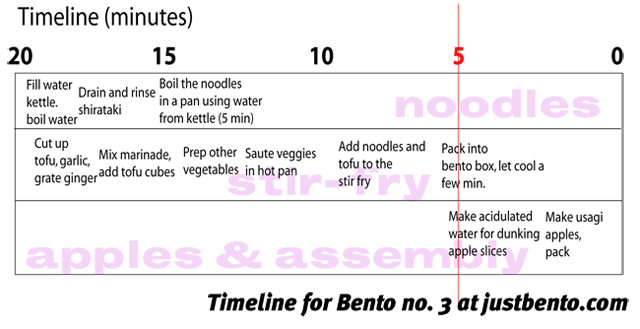
(click on the timeline to see a bigger version)
If you can cut up the vegetables the night before, you will save yourself a lot of time and hassle. You can also marinate the tofu overnight too. Make the rabbit apples while the noodles are cooling.
Notes
- Kochujang is a wonderful spicy bean paste from Korea. I am so addicted to it that I've added a tiny spoonful of extra paste to mix in with the noodles when eating (see upper right corner of the bento photo). It's available at any Korean or general Asian grocery store. It's not the same as tobanjan (or tohbanjan) which is commonly sold in Japanese grocery stores as Korean chili sauce - that is a lot spicier, and 1 tablespoonful will kill your tastebuds! Kochujang comes in big jars or tubs (the smallest I've seen is 500g, or around 1.1 lb). Online it's available from KOA Mart in the U.S.
- If the sauce is too spicy for you (and it is rather spicy) reduce the kochujang to about 1/2 tablespoon, and add more soy sauce or regular miso.
- If you use "Tofu Shirataki", a product sold by House Foods America, add about 20 calories to your count per half pack. Here I'm using plain shirataki, often sold as "Yam noodles", which is made by several manufacturers.
- Use seitan, tempeh, or your favorite vegetable protein instead of the tofu if you wish. Or, use chicken or ground pork.
If you enjoyed this article, please consider supporting this site by becoming my patron via Patreon.