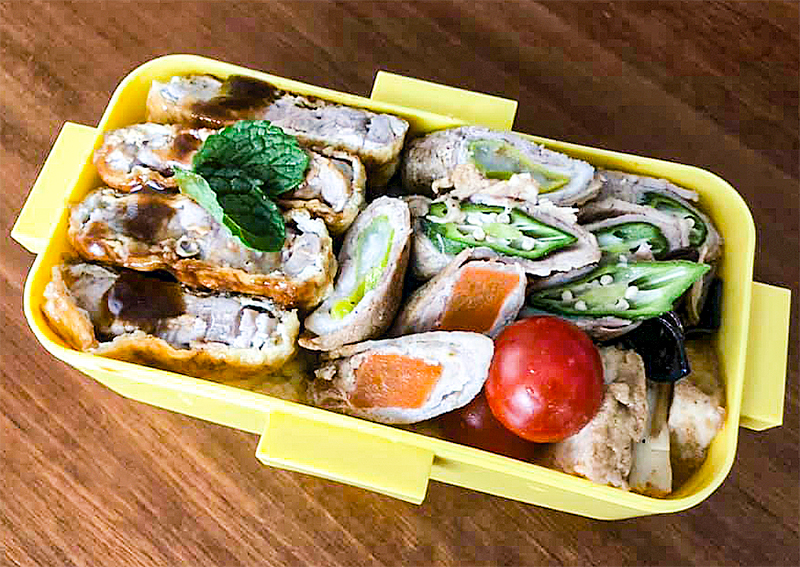
I’m busy getting ready for the photo shoot for the bento cookbook, which starts next week, so I don’t have a lot of time for long posts at the moment. So I thought I’d do a brief write up of this bento I had for lunch today. It’s a good example of a higher-end takeout bento, of the kind you might buy in the food hall of a department store, at specialized stores or stalls in the bigger train stations, and so on. continue reading...

Torihamu (鶏ハム)or chicken ham is a recipe that was born and made popular on the internet. It was first popularized around 2001 or 2002, on an extremely popular and often wild and woolly Japanese community/forum site called 2ch or 2-channel (2ちゃんねる), sometime in 2001 or 2002.
Torihamu is a method of cooking chicken breast meat so that it supposedly resembles ham. Nowadays torihamu has entered the mainstream of Japanese culture; there are many recipes for it in regular cookbooks, and the (very mainstream) Cookpad community cooking site has 370 recipes for making torihamu or where torihamu is a main feature - and 650 recipes where it’s an ingredient.
I didn’t try making torihamu for a long time, since I was skeptical that it would actually manage to turn low-fat, bland and often dry chicken breast meat into something ham-like. But I’ve been experimenting with different methods proposed on the Japanese internets, and am now convinced that it’s well worthwhile making, especially for bento lovers. It is low in fat, has no chemical preservatives, and really lengthens the refrigerator shelf life of chicken. There’s not much difference time and effort wise between making one or several, so it’s really best to make a batch and freeze the extras. I make some when there is a sale on chicken breasts.
So, does it really make white chickem meat turn into ham? Well…that depends on your understanding of what ham should be like. I’d say yes, the torihamu does somewhat resemble cold cuts made from chicken or turkey meat. continue reading...

One of the questions asked in the comments to my first Japan trip report was what kind of healthy ‘fast-food’ options there were. In that vein, I thought I’d talk about something that you can see for yourself, in a way. You might have heard already how totally awesome Japan’s convenience stores, called conbini or konbini, are. They are like the 24 hour delis and bodegas that you see all around a big city like New York in a sense, but go several steps further in terms of customer service. Competition is fierce between the major conbini chains like Lawson, Family Mart, and 7-11, and competition between the conbinis and the fast food restaurants for the quick-meal market is quite serious too.
Japan’s 7-11s are not quite the same as the ones in the U.S. to say the least. One of the services they offer is takeaway or home delivery of pre-ordered meals, including bentos. They have a dedicated web site for this service, called 7meal (セブン・ミール) (in Japanese only.) continue reading...
In case you don’t follow my other food blog, Just Hungry, I am in Japan for the next 3 months. I’ll be reporting on non-bento stuff over there, but of course I’ll be posting about bento related things here!
I just got here yesterday, so I don’t have much to report yet, but here are some photos of takeout bentos available locally, in the suburban area of Yokohama (a major port city near Tokyo) where my mother and stepfather live. continue reading...
Note: This bento safety article is one of the first ones I posted here on Just Bento, back in November 2007. I’ve edited it and added some more information, especially since more and more new people are coming to the site. Even if you’re a veteran bento maker, it’s good to go over the basics occasionally!
A traditional portable bento box meal is meant to be eaten eaten at room temperature. It’s typically made in the morning, then held for a few hours until lunchtime, also at room temperature. Millions and millions of Japanese people eat bentos like this (as well as an increasing number of people all around the world). There are some basic, time-tested precautions to take to ensure that your bento box meals will be tasty and safe when you tuck into them. continue reading...

Bento contents:
Total calories (approx): 510 (how calories are calculated)
Time needed: 25-30 minutes to decorate the muffins (muffins are pre-made and frozen)
Type: Not Japanese, theme bento, vegetarian continue reading...
[Note: This is my New Year’s message from 2008, but it’s just as applicable this year. I’ll be posting a brand new New Year’s post tomorrow later on, but in the meantime, if you are thinking of making bentos part of your routine this year, this is worth a read I think!]
If one of your New Year’s resolutions is to incorporate bento lunches into your life, this is the first part of a mini-series on how to get going.
I know that a lot of people get seduced by the idea of jewel-like little boxes of food greeting them for lunch. But before you embark on the bento route and start collecting bento boxes and cute supplies and so on, ask yourself these questions: continue reading...
First of all, Happy New Year to all bentoists! 2010 is the year of the tiger. (I know, the Chinese or Lunar New Year starts in February, but in Japan the official year goes by the Gregorian calendar, so it’s already the Year of the Tiger (Tora in Japanese). Roar! continue reading...

@justbento - strictly site updates
@makiwi - Maki tweets at random
@mainichinihongo - Maki tweets in Japanese