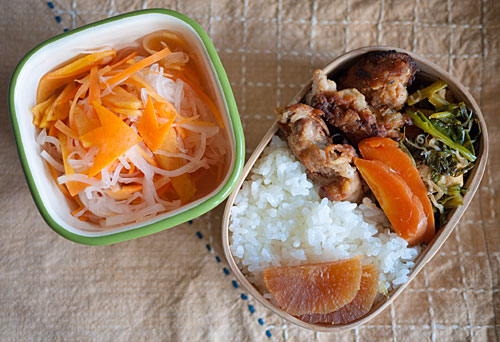
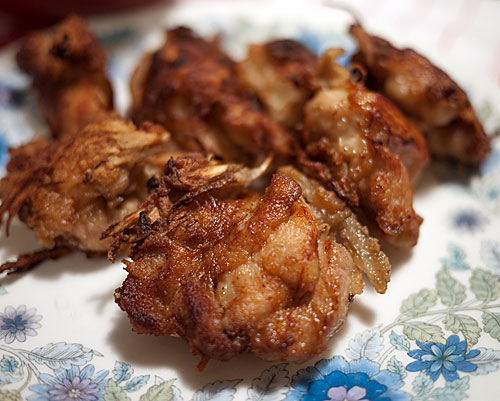
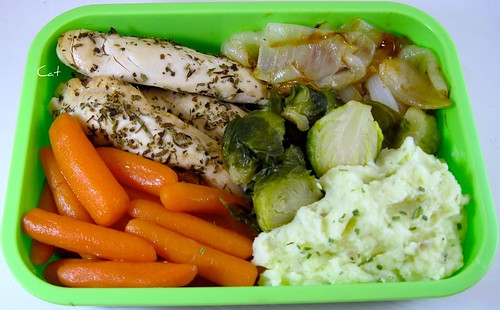
Torihamu (鶏ハム)or chicken ham is a recipe that was born and made popular on the internet. It was first popularized around 2001 or 2002, on an extremely popular and often wild and woolly Japanese community/forum site called 2ch or 2-channel (2ちゃんねる), sometime in 2001 or 2002.
Torihamu is a method of cooking chicken breast meat so that it supposedly resembles ham. Nowadays torihamu has entered the mainstream of Japanese culture; there are many recipes for it in regular cookbooks, and the (very mainstream) Cookpad community cooking site has 370 recipes for making torihamu or where torihamu is a main feature - and 650 recipes where it’s an ingredient.
I didn’t try making torihamu for a long time, since I was skeptical that it would actually manage to turn low-fat, bland and often dry chicken breast meat into something ham-like. But I’ve been experimenting with different methods proposed on the Japanese internets, and am now convinced that it’s well worthwhile making, especially for bento lovers. It is low in fat, has no chemical preservatives, and really lengthens the refrigerator shelf life of chicken. There’s not much difference time and effort wise between making one or several, so it’s really best to make a batch and freeze the extras. I make some when there is a sale on chicken breasts.
So, does it really make white chickem meat turn into ham? Well…that depends on your understanding of what ham should be like. I’d say yes, the torihamu does somewhat resemble cold cuts made from chicken or turkey meat. continue reading...
Bento contents:
Total calories (approx): 580 (how calories are calculated)
Time needed: 10 minutes the night before; 15 minutes in the morning
Type: Japanese picnic continue reading...
It’s now the height of summer (at least here in the Northern hemisphere), which means outdoor bentos and picnics! Chicken wings are great finger food, but you can make them even more convenient, not to mention cute, by turning them into chicken lollipops, also known as cherrystone chicken or chicken cherries. Back in the day I used to hang around a chef who used to work in a hotel restaurant in the ’80s, where he had to turn out hundreds of these little things for banquets. He could whip them out by the dozens in mere minutes, but I take a little longer. They are a bit fiddly, but not hard to do. continue reading...

This is a guest post by Iliana (aka Mosaica), who blogs about her daily life at The Daily Mosaica.
In life I often find myself embracing contradictions, and with regard to planning and preparing bento lunches, it appears that I am, at least, consistent. At times I am purely focused on taking a given recipe, often a Japanese recipe, and rendering it as authentically as possible given the constraints of my semi-rural existence in Vermont, a small state in the northeast of the US. For instance the bento from last week where I made inarizushi — this meal nourished me on a number of levels: it was completely delicious, it tied into a fascinating bit of cultural history, and it expanded my culinary repertoire. While I do miss the days when I was more of a globe-trotter, I’ve come to really appreciate how traveling via recipes from far, far away can give real pleasure —to my nose and eyes and tastebuds, as well as to my intellectual bits.
On the other hand, I’m also a bit of a fiesty girl, and I like to kick up my heels, as it were, in the kitchen, and for me this manifests itself as a willingness to play with food, to be led by my nose, or intuition, or a gut feeling that mixing this with that might just be yummy. That’s what this post is about: Taking ingredients which are traditional in Japanese cuisine and dressing them up in flavors from around the globe: Tibet, Denmark, Africa, India, and beyond. In addition, if you start from a perspective of your own preferred ratio of carb to protein to veggies and fruit, I encourage you to include entirely new ingredients to add fresh flavor and interest to your bento meal. During the five weeks of the Bento Challenge, I was inspired to see how many of us were using foods and flavors from our own backyards to create delicious new twists on the bento theme. continue reading...

Bento Contents:
Total calories (approx): 400 (how calories are calculated)
Time needed: 10-15 minutes in the morning
Type: Simple ‘back to basics’ bento continue reading...

The chicken recipes here on Just Bento are always very popular. And why not? Chicken is relatively inexpensive, cooks fast, and is fairly low-fat if you trim it judiciously.
This very simple Asian-fusionesque flavored marinated chicken breast recipe can be made without the skewers, but it’s just that much more fun, and somehow seems to taste better, if you put it on a stick. continue reading...

Bento Contents:
Total calories (approx): 690 (how calories are calculated) Note this is a ‘large’ portion.
Time needed: 15-20 minutes in the morning
Type: Chicken, for the bento novice
This is presented as an idea for a bento that doesn’t look like a bento, for people with hearty appetites who can’t get their heads around the smallness of a bento box and how it could possibly ‘be enough’. It’s supposed to ressemble a buffalo chicken wing meal, but has cut down on the fat and calories of a real buffalo chicken spread considerably. continue reading...
Bento contents:
Total calories (approx): 390 (how calories are calculated)
Time needed: 10-15 minutes in the morning (you could cut this down by making some things in advance)
Type: Salad! continue reading...

@justbento - strictly site updates
@makiwi - Maki tweets at random
@mainichinihongo - Maki tweets in Japanese