equipment and supplies

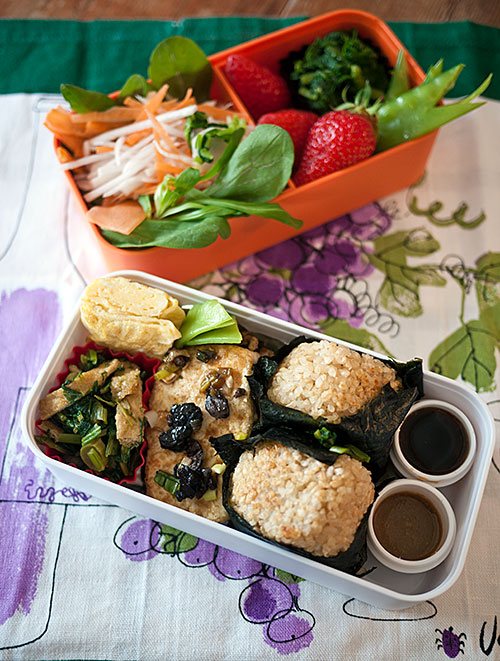
Making bento lunches in a dorm room

dormroombento.jpg

Here’s a great question from reader Jan:

I live in a college dorm, and I only have a microwave, water kettle and George Foreman-style grill (we aren’t allowed to have hotplates in here). Is it an option to grill tofu? And do you have any other suggestions for cooking with my limited resources?

Eating healthy in a dorm room can be a challenge indeed, especially without a fully equipped kitchen. I actually lived in a dorm-like setting (it was off-campus housing but set up like a dorm) for a few months during my early days in college. We had access to an ancient refrigerator, which was compartmentalized inside into lockable litle safe-like boxes with nameplates and keys (!). Each box was about the size of a hotel room safe, so there was barely enough space there for each person to store an apple and a can of soda. We could have a water heater in our rooms, but that was about it (though there were suspiciousl smells periodically wafting about the place from various rooms). I did move to a better place as soon as I could, but here’s what I remember doing from those days, plus some ideas about using those luxury items, a grill and a microwave! continue reading...

Shinzi Katoh bento supplies online

bento38a_480.jpg

Whenever I use the little apple shaped mayonnaise container in my bentos (as I did in the most recent bento no. 48) I always get comments or emails asking where they came from. It’s designed by Shinzi Katoh, a very popular graphic designer and ilustrator in Japan. Of interest to bento fans is the fact that he has designed several bento boxes and accessories. continue reading...

What are Japanese plastic bento boxes made of?

I recently got an email from a Just Bento reader concerning the plastic used to make bento boxes. She was concerned, since she couldn’t read the Japanese writing on the packaging. I’m sure a lot of other readers have similar concerns, especially given recent scares reported in the media about plastic containers leaching chemicals into food and beverages. So here’s what I’ve been able to find out by digging around on various Japanese as well as English-language web sites. continue reading...

Weekend poll: Your favorite source for bento supplies is...

Online from eBay merchants
22% (51 votes)
Online from J-List.com/JBox.com
15% (35 votes)
Online from other merchants (Ichibankan.com, Japancentre.com, Sugarcharms.com, Amazon etc. (Your favorite?))
20% (47 votes)
At a local 100 yen / $1 shop (e.g. Daiso)
13% (30 votes)
A local Japanese grocery or household wares shop (not a 100 yen shop)
13% (29 votes)
From a regular (not Japanese) housewares/kitchenwares shop (Target, Walmart, Ikea, etc.)
7% (16 votes)
More than one! Don't make me choose! (tell us in the comments)
8% (18 votes)
Other (tell us in the comments)
3% (6 votes)
Total votes: 232

Hello Kitty bento decorating set now available at J-List

hellokittyset1.jpg

Great news for fans of cute kyaraben, especialy Hello Kitty themed ones: the Hello Kitty bento decorating set that was featured in this post is now available at J-List/JBox! They offer it for $25, which considering the original Japanese price is 1980 yen is not too bad. Now Her Royal Kittiness can invade bento boxes worldwide with consummate ease! Now, can I resist getting a set myself?

(Note: I’m not sure from the description of the product if the second nori punch with the Kassie and Teddy faces is included - although the pictures do show Kassie and Teddy-shaped onigiri with the appropriate nori faces. If this is important to you, you may want to ask J-List if it is included before ordering.) Rita just got hers and let us know that it does include two nori punches!

(Disclaimer: JustBento is a J-List affiliate.) continue reading...

Bento item of the week: Silicone cupcake liners

As I posted yesterday, making individual pies in muffin or cupcake liners is a great way to make ‘planned leftovers’ from dinner look neat enough to put into a bento box. As Sile suggested in the comments, if you don’t want to use throwaway paper cups, silicone cups are a reusable alternative. Calphalon makes a nice silicone liner and cupcake pan set which would be perfect for this. The liners are in pretty pastel colors.

calpha_cupcake.jpg

You can also use the liners as dividers in your bento, for salads, fruit, and so on. They sell the tin and liners as a set, as shown here, or the liners on their own. Extras might be a good idea to have if you do freeze the food ‘cupcakes’. continue reading...

Reader question: How to get rid of that plastic taste in bento boxes?

Reader Sandy sent in this question recently. She’s having trouble with certain bento boxes, which are making her food taste like plastic!

Hi. I’ve recently begun collecting and using bento boxes (which I adore), but I’ve had some troubles when eating out of them. Everytime I eat something, it tastes like plastic.

Read more about Sandy’s dilemma after the jump. continue reading...

Help me to assemble a comprehensive Japanese grocery store and bento source list!

In case you read Just Bento but not Just Hungry - I’m finally embarking on a project I’ve always intended to tackle, but never got around to: putting together a good listing of Japanese grocery stores around the world. I’ll include bento supplies too, since many people who are interested in bento making are also interested in Japanese cooking, and vice versa.

If you have any stores, mailorder sources, and so on to recommend, please head on over here. With your help I’m hoping to assemble a really useful list!

Bento item of the week: Make your own chopsticks kit, collapsible chopsticks

hashikit1.jpg

This week’s focus is on non-disposable chopsticks that enhance your bento eating experience, as well as being a bit kinder to the environment. continue reading...

Take a virtual bento shopping trip in Japan (part 1)

bentoshop-cando2-obox.jpg

Recently, Mark from CalorieLab went shopping armed with a camera in Japan, and took some pictures of the bento supply displays at several stores. He’s very kindly allowed us to share them with you here. So come along for a virtual bento supply shopping trip in some typical stores in Japan. continue reading...

The care and watering of wooden and lacquerware bento boxes

Since I’ve recommended two wooden boxes as the Bento Box of the Week so far, a few people have asked how practical wooden bento boxes are. continue reading...

Bento box of the week: Magewappa bento box from northern Japan

magewappa1.jpgMagewappa means bent woodware; it’s a traditional hand craft of Odate, which is located in Akita Prefecture in northern Japan. Straight grained pieces of Akita cedar are bent in circular shapes to form the sides of containers. The bent wood is then fastened with a contrasting dark bark or wood strips.

There’s been a resurgence in the popularity of magewappa ware, so it’s made around the country, but this box comes from Akita, where I think the craftsmanship is still the best.

continue reading...

Bento box shopping news

A quick bit of shopping news for UK and European bento fans: it looks like Japan Centre, who recently teamed up with Japanese “100-yen shop” giant Daiso, is slowly starting to carry more Daiso lunch bento boxes and supplies. See the current list of offerings here. Maybe if they prove popular they’ll carry more bento supplies! continue reading...

About rice cookers

A heads up just in case you read Just Bento but not Just Hungry, you may be interested in the new post up there, Answering some rice cooker questions.

Bento box of the week: Hand carved and lacquered Japanese elm

keyaki-bento1.jpg

Hey, a new series! Every week on or around Wednesday, I’ll be featuring a bento box or bento accessory that has caught my eye for some reason. I’ll try to stick to items that can be ordered online as much as possible, unless it’s something truly exceptional.

Important notice: This bento box can be selected as your prize in the Menu for Hope drawing! continue reading...

2007 Holiday Gift Guide for the bento fan in your life

xmas-onigiri.pngIt’s that time of the year again. Here are some Christmas and holiday gift ideas for the bento maker in your life, or even someone who’s just thinking about making bento in the new year. Perhaps that person is you, in which case you could use this as a list for Santa to refer to. I’ve made some suggestions in all price ranges, because you never know how generous Santa is feeling. continue reading...

Speed bento tip: Squeeze bottles!

squeeze_honey.jpgI’m always looking for ways to shave a few minutes off bento prep time. One way to do this is to look at the containers the condiments, sauces and other ingredients that you use frequently come in.

I use honey quite a lot as a sweetener. Measuring it out of a glass jar is a sticky, messy business, that more often than not requires washing of a spoon, wiping drips around the lid and jar, and other little things that add up in terms of wasted time. So, for morning preperations I rely on the neat runny honey in a squeeze bottle. It’s not rare gourmet honey gathered from bees who suckle on rare alpine flora (I save that kind for leisurely cups of lemon-honey-water), but it sure cuts down on bento making time in the morning. continue reading...

Streamlining the bento making process: Preparation and washing up

As you read about making bento, you might wonder how this is all possible to do in the busy morning. It is possible, since millions of Japanese people do it every day - and no, not all of them are stay-at-home mothers (and who is busier and more time-constrained more than a mom anyway?) Practice makes perfect, so the more you make bento the faster you get. But a little bit of preparation and forethought goes a long way towards streamlining your bento making. continue reading...

Essential equipment and supplies for making bento lunches

Bento lunches need to be assembled in the morning to taste as good as they can at lunch time. I aim to make any bento lunch in 20 minutes or less. On occasion I may go to 30 minutes, but that’s as much time as I can realistically spend. I find all of the things listed here to be very useful.

  • Two small non-stick frying pans
  • One large (28cm diameter or about 11 inches) non-stick frying pan
  • One or two small to mid-size saucepans

I use the small frying pans for quick frying, sautéing, and more. I use the large frying pan for boiling and steaming tasks as well as sautéing. continue reading...

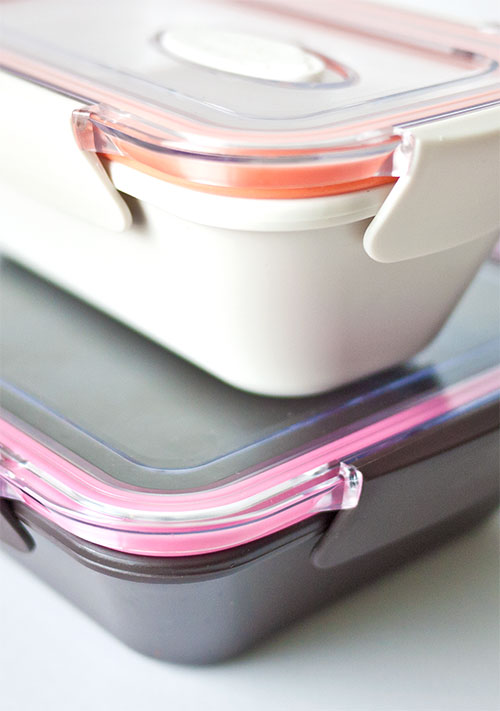
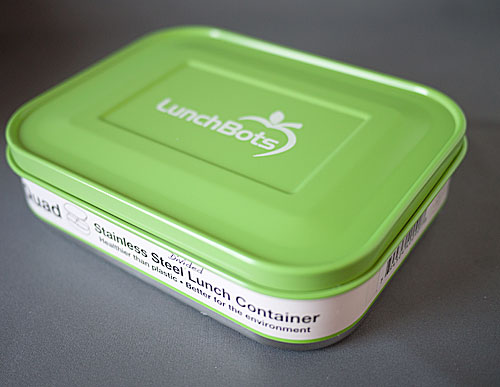
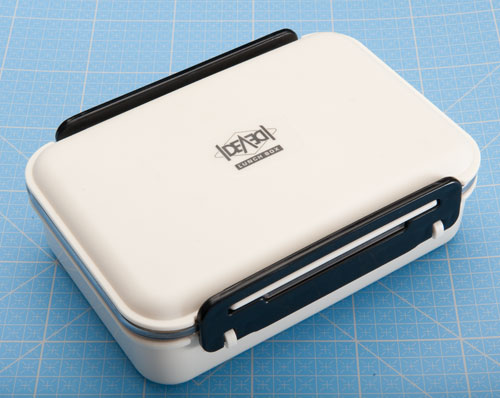
Selecting the right bento lunch box

How to select the right bento lunch box for you. continue reading...

Related sites

    » follow me on Twitter

    Just Bento is a site dedicated to healthy bento box meals.

    Causes we support

    wfp banner img
    freerice234_60_Banner2.jpg

    Subscribe

    Subscribe in a reader


    Subscribe by email:


    Or use your favorite web tool:
    Add to Google Reader or Homepage

    Add to netvibes
    Subscribe in Bloglines

    Share this site

    Add to Technorati Favorites

    stumbleupon