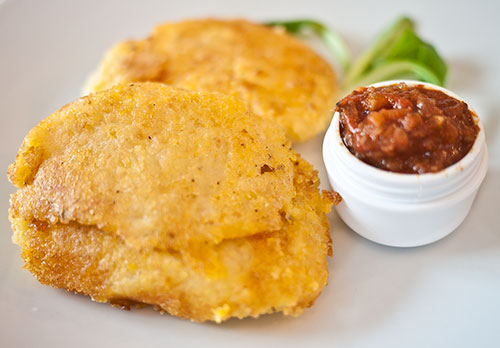
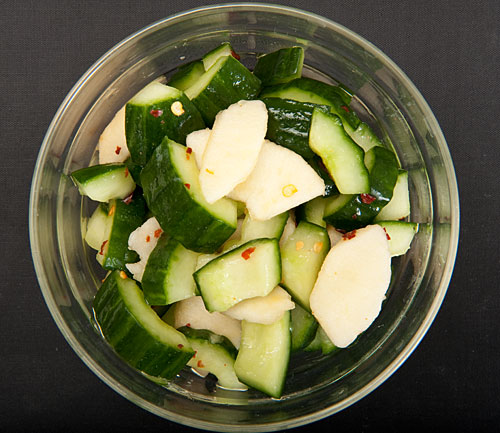
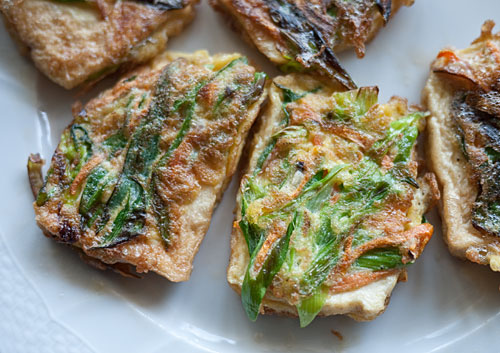
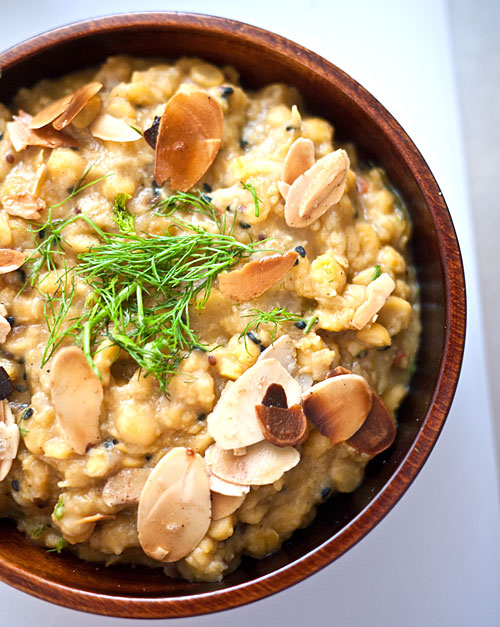
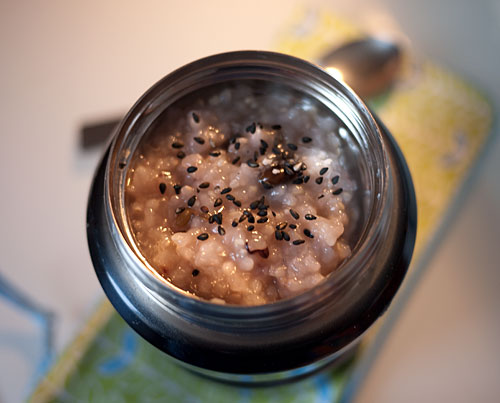
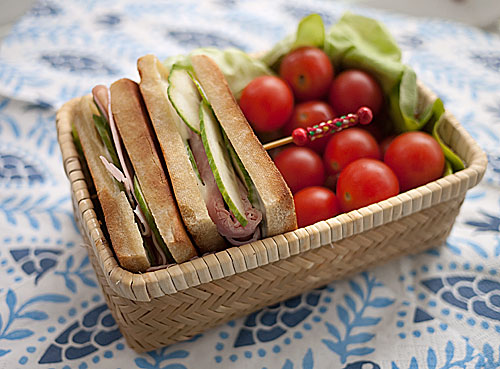
Bento contents:
Total calories (approx): 450 (how calories are calculated)
Time needed: 5-10 minutes with pre-made components
Type: Vegan, not Japanese, gluten-free continue reading...

Bento contents:
Total calories (approx): 520 (how calories are calculated)
Time needed: 20-25 minutes in the morning if making from scratch; much less if using pre-made/pre-frozen components
Type: Bread-free, vegan continue reading...
More chicken recipes! Tsukune is a term that means “kneaded and shaped into a round shape”. It usually means a dish made with finely ground and flavored chicken or fish. Chicken tsukune are very well suited to bentos, since they are soft and stay nice and moist. They are also gluten-free (no breadcrumbs!), if you take care to use a gluten-free cornstarch or potato starch and soy sauce.
Today I’ll show you how to make two type of chicken tsukune from the same basic recipe. First, the very traditional stewed tsukune dumplings, cooked in a broth with carrots (tsukune-ni).

And here are some pan-fried tsukune, or tsukune baagaa (tsukune burgers) - actually mini-burgers to fit neatly into a bento box.

I do love carrots. They are full of nutrients and fiber, inexpensive, available year around, and durable. And their bright orange color (or other colors, if you delve into the exotic varieties) add instant cheer to any dish or bento box. So when I saw that my favorite vegan author Yumiko Kano was coming out with a new book of just carrot recipes, I reserved it in advance without a second thought.
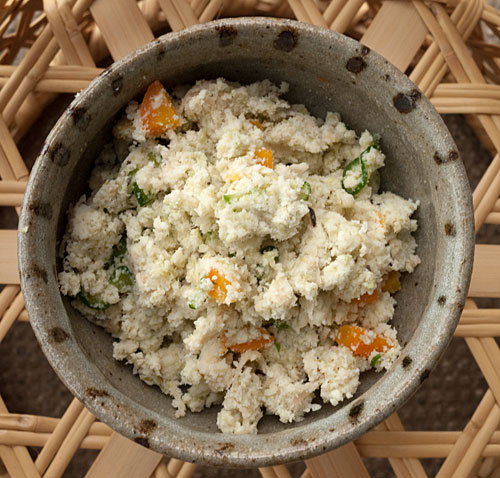
This is a recipe adapted from that book. It’s a soft, light carrot spread or paste that is sweet, salty and a bit spicy. It has tahini (sesame seed paste) in it, which adds richness as well as protein. The spiciness comes from cumin and red chili pepper powder, and the sweetness comes from the carrot itself, which is roasted to intensify the flavor, and a tad of raw cane sugar. It is great as a spread on crackers or rice cakes or toast, or as a dip. The soft texture means it can’t quite substitute for peanut butter in a pb and j sandwich, but it’s fantastic in a wrap sandwich. It is of course totally gluten-free and nut-free too, so if your child’s school has a “no-nut” policy, which seems to be increasingly common these days, this is great. continue reading...
Bento contents:
Total calories (approx): 415 (how calories are calculated)
Time needed: 20-30 minutes total
Type: Asian-fusion, vegan, gluten-free continue reading...

This is a very juicy and tasty way of cooking frozen tofu - and it’s not Japanese, for a change. A great vegan protein dish! continue reading...

(click on image for a bigger view)
Bento contents:
Total calories (approx): 400 (how calories are calculated)
Time needed: 10 minutes in the morning, a bit of this and that previously
Type: Japanese, vegan, gluten-free continue reading...

This is a very classic Japanese staple dish. More often than not, I have some variation of it in my refrigerator. The base is hijiki seaweed, which is soaked and reconstituted then cooked in dashi with various other ingredients that give it flavor. It’s great to add to a bento box.
This version has carrots and fried tofu in it. Cutting them into fancy shapes is totally optional, but it does make your bentos a bit more fun.
I’ve used me-hijiki for this but you can use the regular long branch hijiki too. continue reading...
(click on image for a bigger view)
Bento contents:
Total calories (approx): 495 (how calories are calculated)
Time needed: 15 minutes in the morning, 20+ minutes make-ahead
Type: Japanese, mostly make-ahead
This bento uses a lot of staples and make-ahead items. This is really the key to assembling a varied bento lunch box without having to wake up an hour early in the morning to do so! The only thing that is made from scratch in the morning is the bacon wrapped tofu, and even that can be made the night before if needed (though it’s best if you make it in the morning.) Johbisai or staples are really great: I got six total bentos out of one batch of the pepper and onion confit, and I’ll get at least 2 or 4 bentos out of the 3 remaining tea eggs.
The star of the bento though is the bacon wrapped tofu. It’s delicious hot or cold. For a bento, the salty-sweet variation is particularly good. Be sure to use an extra-firm tofu. continue reading...

This is a sort of short-term storage staple. It only keeps in the refrigerator for about 3 or 4 days, but you can make them at any time and they are handy for filling a corner of a bento box.
There are many more complicated recipes for tea eggs, a traditional Chinese recipe. The boiled eggs are usually meant to be kept in the tea-based marinade with their shells on, carefully cracked all around so that a lovely marble pattern is revealed when the eggs are peeled.
My method is way simpler, and is motivated by the fact that I don’t really want to be fiddling around with peeling eggs in the morning. Since the eggs are totally peeled, the marinade will penetrate it faster and deeper, so you can start using them just an hour after you’ve put them in the liquid if you like. continue reading...

Bento contents:
Total calories (approx): 380-400 (how calories are calculated)
Time needed: 25 minutes total (10 the night before, 15 in the morning)
Type: Fusion-vegan-gluten-free continue reading...