Shuumai or shumai dumplings (焼売)are a standby for dim sum, and are very well suited to bentos. They are small, taste good cold, freeze very well, and are a lot easier to make than gyoza dumplings.
You’ve probably encountered shuumai dumplings in the freezer section of Asian or Japanese grocery stores. Frozen ones are usually pretty good, but if you make them yourself you know exactly what you put in them. I just make a double batch whenever I decide to make shuumai for dinner. Just follow along with the photos and you’ll be turning out lots of shuumai yourself. continue reading...
Total calories (approx): 420 (how calories are calculated)
Time needed in the morning: 10-15 minutes
Type: Japanese continue reading...
Bento contents:
Total calories (approx): 645 (how calories are calculated)
Type: Pasta salad! continue reading...

Bento contents, 2-tier bento (580ml capacity):
Total calories (approx): 445 (how calories are calculated)

Bento contents, 1-tier bento (670ml capacity):
Total calories (approx): 515 (how calories are calculated)
Time needed for both: 10-20 minutes in the morning (depending on your assembly speed and neatness factor)
Type: Japanese, omnivore (salmon, egg)
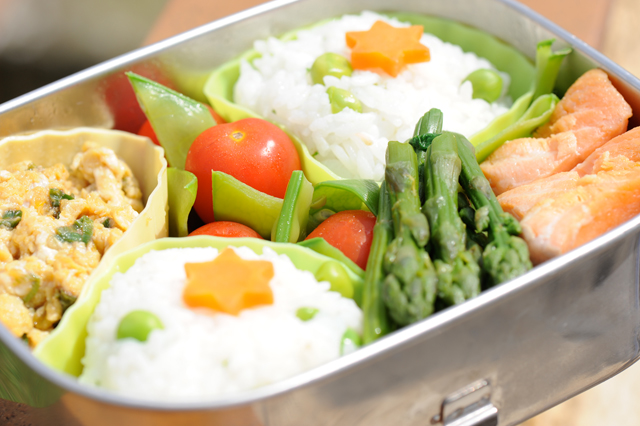
This is a fairly standard, classic Japanese style bento. I make this type of bento far more than any other. I’ve already given instructions on how to make the individual pieces, but I thought it might be useful to see step-by-step how to pack a bento box properly, with an eye to the following:
I’ve used two standard type bento boxes; a 2-tier model, and a 1-tier model with a divider. continue reading...

Few things are as easy to make or as tasty for lunch than a simple tuna salad sandwich. It’s one of my favorite things to make when I’m too busy or occupied for more involved cooking. But porting around tuna salad when the weather is warm can be a bit of a problem.
I’ve been experimenting with freezing tuna salad in different ways, or rather stages of development as it were, as well as different tuna salad mixes. continue reading...

Bento contents:
Total calories (approx): 450 (how calories are calculated)
Time needed: 15-20 minutes in the morning
Type: Japanese, omnivore (salmon, miso, fried tofu) continue reading...

Bento contents: continue reading...
Bento contents:
Total calories (approx): 480 (how calories are calculated)
Time needed: 10-15 minutes
Type: Japanese, meatless (tuna) continue reading...

I do like mini-burgers for bentos - they’re easy to make, easy to eat, and cute. This time it’s a tuna and tofu burger flavored with miso. Canned tuna is a versatile and handy staple to have around. I always seem to have at least a couple around - you may too. And it’s cheap, so if you live in the U.S. and are feeling a bit poor today after filing your taxes, these will help a bit in stretching your food budget. It’s better if you make the burgers with oil canned tuna, but water canned will do. They’re quick to mix up in a plastic bag, and cook up in a few minutes. continue reading...
Bento contents:
Total calories (approx): 380 (how calories are calculated)
Time needed: 20 minutes in the morning, 10-15 the night before
Bento contents:
Total calories (approx): 400 (how calories are calculated)
Time needed: 15-20 minutes in the morning, 5 the night before
Type: Japanese, sushi
Chirashizushi is just a bed of sushi rice with toppings of your choice. Here I have used peeled frozen shrimp that is steam-cooked with a little salt and sake in a dry pan, half of a chikuwa (a fish paste produce that looks like a bamboo branch), plus cucumber, edamame and carrots. If you cut the carrots in decorative shapes, allow a little more time. It will be pretty anyway with the colorful toppings. Since the protein components of this bento are quite low fat and low calorie, the whole bento is under 400 calories. This bento was inspired by one in Yaseru Obento Recipes. continue reading...
Bento contents:
Total calories (approx): 490 (how calories are calculated)
Time needed: 5-10 minutes in the morning, 20-30 previously continue reading...

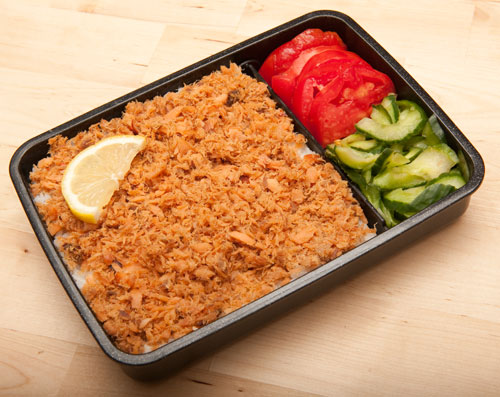
Is this salmon (sake) furikake? Or is it salmon (sake) flakes? Or maybe it’s even salmon soboro. Whatever you call it, it’s finely flaked salmon that you can sprinkle onto plain rice, use as an onigiri filling, or on ochazuke. You could fold it into egg for a salmon omelette, on boiled vegetables…whatever your imagination can come up with.
Salmon flakes are often sold in jars that cost around $8 for about 150g. You can make it yourself for less than $3, depending on how expensive the salmon is. You can be even more frugal and use the little bits that are stuck on the bones when you filet a whole salmon. This is probably how fish soboro or flakes or furikake was invented in the first place. continue reading...

(click on image for a bigger view)
Bento contents:
Total calories (approx): 400 (how calories are calculated)
Time needed: 10 minutes in the morning, a bit of this and that previously
Type: Japanese, vegan, gluten-free continue reading...
Bento contents:
Total calories (approx): 435 (how calories are calculated)
Time needed: 5 to 10 minutes
Type: Japanese continue reading...

Salted salmon, called shiozake or shiojake (塩鮭), is so ubiquitous in Japan that when people just talk about “salmon” (sake or shake) they are usually referring to the salted kind rather than the raw kind (which is specifically called namazake(生鮭)). Salted salmon is a staple ingredient of bento, used as an onigiri rice ball filling, flaked on top of or mixed into rice, or just grilled.
Salted salmon is cheap and easily available in Japan, but not so outside of Japan. So I’ve been making it myself for some time now, and it’s quite easy. All you need is a typical refrigerator that has low humidity. (If yours doesn’t have excess condensation in it, and old leafy vegetables get dessicated in the corner of your vegetable bin, then it’s ideal.) continue reading...