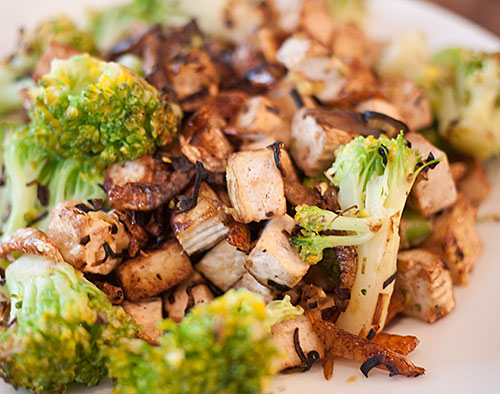
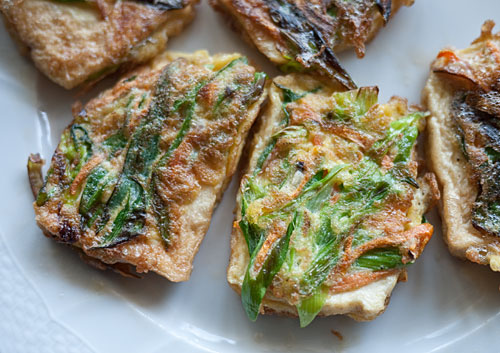
From the archives. I got an email over the weekend from someone asking for vegetarian recipes. Well, there are a lot of vegetarian and vegan recipes here actually. Here is one I posted last year, a tasty ovo-vegetarian tofu-and-egg dish inspired by healthy Korean cooking, named after a classic italian dish. And of course, great in bentos! continue reading...

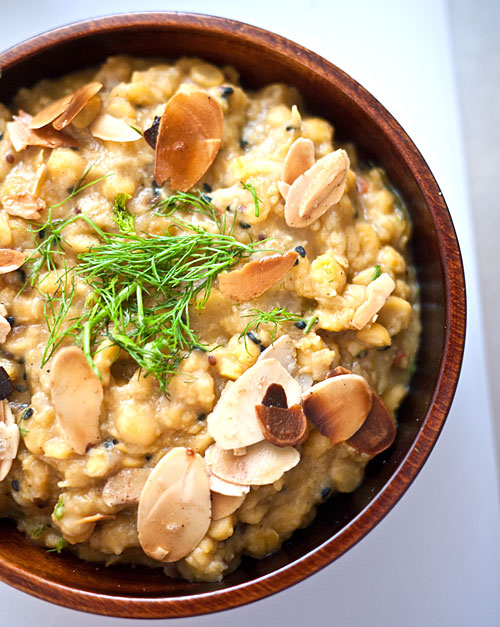
An Indian-influenced complete-meal recipe, great for thermal lunch jars or cold in regular bentos. Vegan, gluten-free, and even diabetic-friendly, but I promise it still tastes terrific! continue reading...

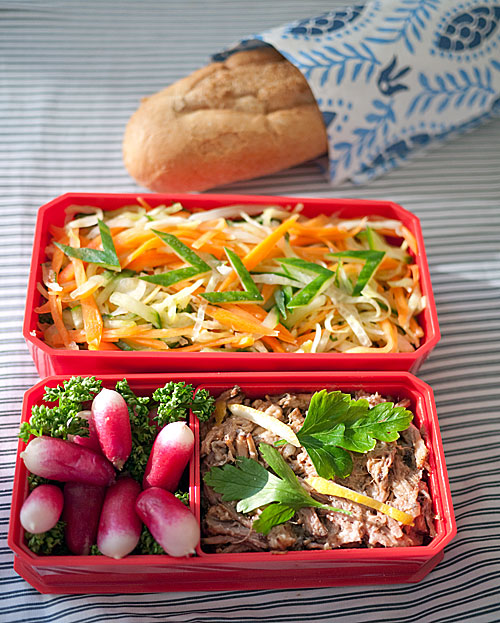
Bento contents:
Total calories (approx): 510 cal (how calories are calculated)
Time needed: 5-10 minutes in the morning from pre-made components
Type: Sort-of-Vietnamese (Asian), bread based continue reading...

A very simple ‘instant’ pickle-relish-salad made with always available vegetables, plus an equally easy decorative cutting technique. continue reading...

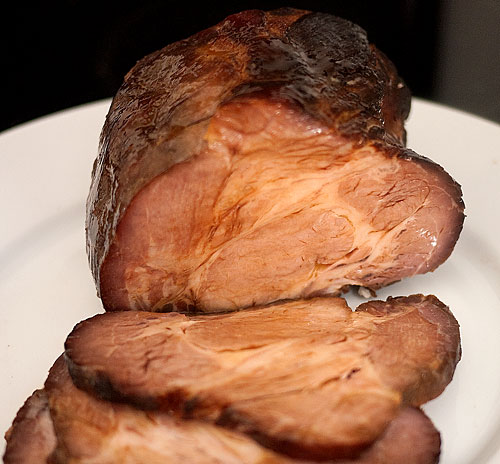
I have posted a recipe for char siu, or Chinese style roast pork, previously. But that was way back in 2004, and my standard go-to recipe has changed a bit since then. Plus, it makes a great staple for bentos, so here it is. continue reading...

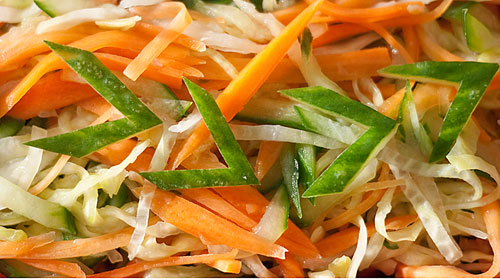
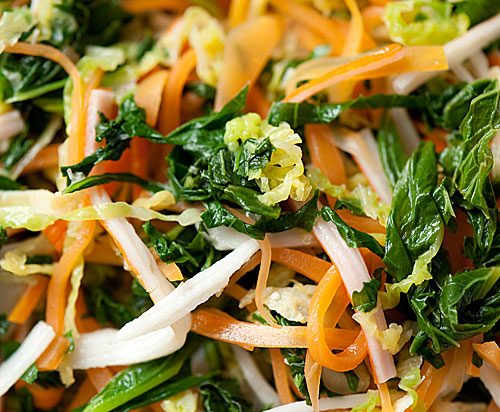
This is a very simple and quick vegetable side dish or filler for bentos, using vegetables available in the spring - new or spring cabbage, little carrots, and greens, with shredded crabstick or surimi. You could use shredded ham instead of the crabstick, splash out a bit and use real crabmeat, or just keep it all-vegetable. This is a namul, a Korean salad-like side dish. More about namul (and another namul recipe) here. The addition of a bit of vinegar is very unauthentic, but I think it enhances the flavors.
The most time consuming part of this recipe is shredding the vegetables. You can cheat and use pre-shredded carrots and cabbage, or use your food processor, if you’re not too handy with a knife. continue reading...

This is a guest post by Iliana (aka Mosaica), who blogs about her daily life at The Daily Mosaica.
In life I often find myself embracing contradictions, and with regard to planning and preparing bento lunches, it appears that I am, at least, consistent. At times I am purely focused on taking a given recipe, often a Japanese recipe, and rendering it as authentically as possible given the constraints of my semi-rural existence in Vermont, a small state in the northeast of the US. For instance the bento from last week where I made inarizushi — this meal nourished me on a number of levels: it was completely delicious, it tied into a fascinating bit of cultural history, and it expanded my culinary repertoire. While I do miss the days when I was more of a globe-trotter, I’ve come to really appreciate how traveling via recipes from far, far away can give real pleasure —to my nose and eyes and tastebuds, as well as to my intellectual bits.
On the other hand, I’m also a bit of a fiesty girl, and I like to kick up my heels, as it were, in the kitchen, and for me this manifests itself as a willingness to play with food, to be led by my nose, or intuition, or a gut feeling that mixing this with that might just be yummy. That’s what this post is about: Taking ingredients which are traditional in Japanese cuisine and dressing them up in flavors from around the globe: Tibet, Denmark, Africa, India, and beyond. In addition, if you start from a perspective of your own preferred ratio of carb to protein to veggies and fruit, I encourage you to include entirely new ingredients to add fresh flavor and interest to your bento meal. During the five weeks of the Bento Challenge, I was inspired to see how many of us were using foods and flavors from our own backyards to create delicious new twists on the bento theme. continue reading...

Buchimgae or jijimi or chijimi is a thin, savory pancake from Korea. It’s similar to a Japanese okonomiyaki, but is a bit less complicated to make. (Also closely related is pajon, a pancake with lots of green onions.) It’s basically a pancake-like batter holding together a lot of vegetables and other ingredients. It’s a great way of using up leftovers, and holds up a lot better than okonomiyaki as a bento item I think. It makes a nice change from rice or bread based bentos.
Here are two batter recipes. One is a traditional one using wheat flour and beaten egg, the other one is a vegan and gluten-free variation. Use the one that suits your needs. The traditional one is a bit lighter and crispier, and the vegan one is denser. continue reading...

@justbento - strictly site updates
@makiwi - Maki tweets at random
@mainichinihongo - Maki tweets in Japanese