recipe

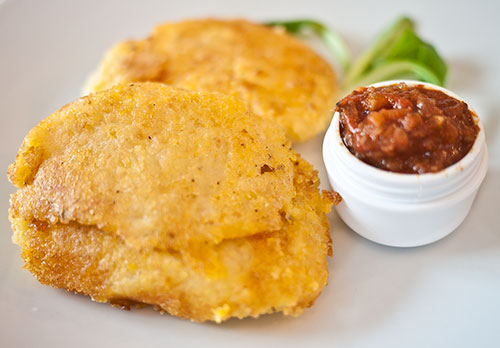
Shrimp and tofu mini-burgers (tsukune) with red pepper sauce

shrimp_tsukune.jpg

There are already several mini-burger or tsukune dumpling type of recipes here, but here’s another one. What can I say - mini-burgers are just perfect for bentos: they taste good when they are cold, can be made in quantity, and usually freeze very well.

This time it’s a shrimp and tofu version, adapted quite a bit from a recipe in a recent issue of Kyou no ryouri: Beginners (Today’s Cooking: Beginners) magazine. It’s best when made with fresh shrimp, but uncooked frozen shrimp is fine. You probably don’t want to be messing around with shrimp paste in the morning, so it can made it the night before (have some for dinner too - it’s great hot) or freeze a batch. The sweet-hot red pepper jam I’ve used as a sauce goes very well with it, but if you don’t want to go to the trouble of making the jam, use a sweet or hot bottled chili sauce. continue reading...

Earl Grey Tea Muffins

teamuffins2.jpg

One more muffin recipe in this unplanned muffin mini-marathon. These are a bit sweeter than the other muffins I’ve posted, so are more suitable as in-between-meal snacks perhaps, or even at home for teatime. They are still not overly sweet though, and are featherly light and fragrant. Flecked throughout with fine tea leaves, they sort of taste like an Earl Grey milk tea in muffin form. You can see the tea when you split one open.

teamuffinsinside_480.jpg

Since each mini-muffin is only 60 calories (120 for regular sized ones), consider carrying these along instead of succumbing to a donut or pastry. continue reading...

Two Corn Muffins: Pumpkin Yogurt and Classic Buttermilk

cornmuffins2.jpg

I am definitely in a muffin phase at the moment, so I hope you don’t mind more muffin recipes! Muffins are the easiest thing to bake, and are great to tote along for in-between meal snacks as well as lunch. And having a good stash of muffins in the freezer, ready to go at a moment’s notice on the busiest day, makes you feel a bit smug about how organized you are.

I love corn muffins, with the little crunchy grains. Here are two types of corn muffins, that are just lightly sweet and therefore perfect to accompany a soup, a spicy chili, and so on. One is a pumpkin or winter squash and yogurt muffin, and the other is a classic buttermilk muffin, the kind they used to serve in coffee shops in New York - do they still?

They can be made into mini-size or regular size; the mini muffins are about 75 calories each, and the regular size about 150 calories each.

These two recipes use eggs and dairy products so are not vegan. They do use vegetable oil rather than butter, to keep them on the healthy and light side. continue reading...

Two types of savory vegan muffins: Pumpkin-miso and Carrot-onion-hazelnuts

veganmuffins_480.jpg

I think mini muffins are great for bentos. They are tiny, easy and fast to make, freeze beautifully, and defrost naturally by lunchtime if you take them out of the freezer in the morning. They are handy snacks to eat when your energy is running low but you don’t have time to stop and eat properly, and are also great accompaniments to a soup or salad.

Here are two savory muffin recipes that also happen to be vegan. continue reading...

Quinoa, parsley and pepper salad

quinoa-parsley-salad.jpg

This is a very easy vegan main dish that’s as pretty as a picture. It’s packed with protein from the quinoa, and all kinds of good vitamins and such from the parsley and peppers. It also holds up in the refrigerator for a few days, since the lemon juice, salt and oil help to keep it fresh tasting. I made a fairly large batch and ate it over the course of a week! You can also play with the base and add things like chopped up olives, cooked beans, cheese (vegan or not), flaked canned tuna and so on. It is inspired by a recipe in Saisai Lunch; the original recipe uses okara instead of quinoa, and uses the salad as a topping on a bed of rice. I think my quinoa version, which is designed to be eaten on its own and not as a rice topping, is just as nice if not (dare I say) more so. continue reading...

Mediterranean flavored green vegan burgers

greenmushroomtofuburger.jpg

I’ve loaded up the recipe archives with several chicken recipes, so now it’s time to add some more vegan and vegetarian recipes! To kick things off, here is a versatile, very tasty and very nutritious tofu based burger.

I haven’t done much in the garden this year, but I did rather randomly sew a whole lot of ‘cut and come again’ type greens seeds. Despite not taking much care of them, at the moment we are inundated with loads of slightly insect and slug-nibbled arugula or rucola, Swiss chard and other greens.

These vegan burgers are a very nice way to use up lots of greens like these in ways other than in salads. They are light yet very flavorful, so that even the most hardened carnivore is likely to gobble them up. They are good plain, or with a dipping sauce, and are great for bentos. continue reading...

Miso chicken (tori misoyaki)

misochicken.jpg

The last recipe in my chicken mini-marathon is this so-simple yet tasty miso marinated and pan-fried or grilled chicken. I’ve again used chicken thighs, but this works well with breast meat as well as other meats such as pork and beef, and fish too. Sweet-salty miso marinades like this are quite standard in Japanese cooking. (See New Potatoes with Sweet-Spicy Miso, over on Just Hungry.) continue reading...

Balsamic Sesame Chicken

sesamechicken.jpg

Continuing the chicken theme, here is another very simple recipe using boneless chicken thighs. This time I have used skinless meat. The thighs are cut into pieces, marinated in balsamic vinegar and soy sauce, and coated with sesame seeds. The balsamic vinegar adds tang and a little sweetness. They are then simply pan=fried in a non-stick frying pan that is barely coated with oil. I’ve used both black and white sesame seeds for a little added color, but you could use all-white (light brown) sesame seeds. (Using all black seeds might make them look carbonized!) continue reading...

Simply grilled or pan-fried salted chicken thighs

panfriedchickenthighs1.jpg

Continuing on the chicken-fit-for-bento theme, here is another very simple grilled or pan-fried chicken recipe. This time, instead of chicken breast, chicken thighs are used. I know that many dieters avoid dark meat, and it is admittedly higher in fat content than white. But I think it’s so much more flavorful, especially when it comes from ordinary supermarket chicken.

When I was in college, I did the bookkeeping for a midtown Manhattan Japanese restaurant for a few months. The pay was mediocre and the work itself was quite boring, but I did at least get free lunch. Even though theoretically I could choose anything from the menu (barring the really expensive sushi or sashimi) on most days I chose the chikin shioyaki teishoku (Grilled salt chicken set). It was just a large salted chicken thigh with side vegetables (broccoli and something else, which I can’t remember), a bowl of miso soup and a bowl of white rice, but that chicken was so delicious! I couldn’t figure out why it was so crispy on the outside yet juicy on the inside. Some time later, I found out their ‘secret’ in a roundabout way. The key is to salt the chicken meat, then let it rest for a while. This causes the chicken to exude excess moisture, and firms up the meat. It does mean you need to plan ahead a bit to allow for the resting time, but it’s well worth it. You might wonder if a chicken dish can be so good with just salt and a little pepper, but it really is! continue reading...

Two kinds of chicken tsukune: Stewed dumplings and panfried mini-burgers

More chicken recipes! Tsukune is a term that means “kneaded and shaped into a round shape”. It usually means a dish made with finely ground and flavored chicken or fish. Chicken tsukune are very well suited to bentos, since they are soft and stay nice and moist. They are also gluten-free (no breadcrumbs!), if you take care to use a gluten-free cornstarch or potato starch and soy sauce.

Today I’ll show you how to make two type of chicken tsukune from the same basic recipe. First, the very traditional stewed tsukune dumplings, cooked in a broth with carrots (tsukune-ni).

tsukune1.jpg

And here are some pan-fried tsukune, or tsukune baagaa (tsukune burgers) - actually mini-burgers to fit neatly into a bento box.

tsukuneburger2.jpg continue reading...

The easiest always-moist poached chicken

poachedchicken1.jpg

Poached chicken is a really handy thing to have around, for making chicken salad, sandwiches, and a whole lot more. When I have the time and the will, I poach whole chickens and stock them in the freezer. These days though, I don’t have the time or the energy for such tasks, so I cheat a bit and poach boneless chicken breasts.

While chicken breasts are so handy, it’s very easy to overcook them. This method is just about the easiest and most foolproof way of cooking the white meat so that it’s moist and tender, yet cooked through properly. continue reading...

Pan-fried lemon chicken nuggets

pflemonchicken1.jpg

Although I use chicken quite a lot in my bentos, I realized that I have very few bento-appropriate chicken recipes up here on Just Bento, or even over on Just Hungry. I am going to rectify this situation over the next few days, so if you are a chicken fan, stay tuned!

The first chicken recipe is one I have made for years and years - tender, lemony white meat nuggets that are infused with lemon. They very quick to make, good hot or cold, and versatile. They are pan fried, not deep-fried, so they are not crispy on the outside, but are delicious nevertheless. You can use them in a rice based bento, with noodles, or as a sandwich filling. They can be eaten as-is with a cocktail stick or the fingers too. continue reading...

Cooked to death hot and sweet peppers

ctd-hotsweetpeppers.jpg

Greenhouse grown peppers are available year round, but summer is when peppers are really in season. I picked up a bushel load of colorful hot and sweet peppers at a market last week, and some of them turned into this item which is great for bento.

It couldn’t be easier to make, but does take a little time. A mixture of mildly hot chili peppers and sweet peppers are briefly stir fried in sesame oil, then simmered for about half an hour or more. The peppers are falling-apart soft, spicy, sweet and salty. It’s great to tuck into the corner of a bento box, and, well drained of the cooking liquid, also makes a great and unusual filling for onigiri (rice balls).

My grandmother used to make this kind of ‘cooked to death’ or until very limp (kuta-kuta ni) vegetable dish quite a bit. It’s a great way to reduce a big pile of vegetables to a manageable eating amount. This method works well with green beans too. I think it’s rather similar to the way some vegetables such as greens are cooked for a long time in American Southern cooking. I’m no nutrionist, but you do eat all of the ‘cooking liquor’ alongside the vegetables, so nutrition loss may not be so bad, though raw-food advocates may shudder.

The key here is the selection of peppers. The spicy chili pepppers should only be mildly spicy. In Japan you would use shishito peppers. Here I used a variety from Italy that I’m not sure of the variety name of, but it is similarly thin-walled and mild enough not to burn my mouth. Jalapeños or anchos might be good choices too. For the sweet peppers, I used the long red peppers that are called banana peppers, Hungarian peppers or paprikas, depending on who is selling them and where. continue reading...

Glazed Triple-Soy Loaf

soyblock1.jpg

I am always on the lookout for vegan/vegetarian protein recipes that are bento friendly, and this flat oven baked loaf is another one. It’s called triple-soy because it has tofu, edamame and miso in it. It has a very dense, rich texture with a sweet-salty glaze. One or two small squares are quite enough for a bento. It may fall apart a bit during transport, but that doesn’t affect the texture or flavor. If you can, put it in its own compartment in your bento. continue reading...

Lower-calorie higher fibre inarizushi with hijiki

inarihijiki1.jpg

Inarizushi are excellent for bento, but they can be a bit high in calories since they are stuffed with sushi rice. The original version with a 100% rice filling has about 1/4 to 1/3 cup of rice per bag, which makes each inarizushi about 110 to 130 calories. On the other hand these inarizushi are about 80 to 100 calories per piece. The secret is in the filling. continue reading...

How to make shuumai / shumai dumplings

ebishuumai480.jpg

Shuumai or shumai dumplings (焼売)are a standby for dim sum, and are very well suited to bentos. They are small, taste good cold, freeze very well, and are a lot easier to make than gyoza dumplings.

You’ve probably encountered shuumai dumplings in the freezer section of Asian or Japanese grocery stores. Frozen ones are usually pretty good, but if you make them yourself you know exactly what you put in them. I just make a double batch whenever I decide to make shuumai for dinner. Just follow along with the photos and you’ll be turning out lots of shuumai yourself. continue reading...

Bento filler: Cherry tomato and leftover vegetable gratin cup

mayogratincup.jpg

This vegetable gratin in a cup is a great way to use up leftover vegetables in a tasty way. It only takes a few minutes to assemble too. The only thing you should have are the cherry tomatoes, which make their own sauce in a way. Otherwise you can use any cooked or frozen vegetables you have on hand. Here I’ve used some leftover zucchini and frozen carrot and peas. You could use the ever popular sweet pepper and onion confit too.

The ‘sauce’ used is mayonnaise. Cooking with mayonnaise may seem a bit odd, but it works very well. It’s a very popular all-around sauce in Japanese home cooking. Cooked mayonnaise sauce tastes very nice when cold, making it very suited to bento dishes. I have used a ‘light’ mayonnaise here to halve the calories (50 calories per tablespoon, instead of about 100 for regular mayo), and added a little pesto from a jar to make it even tastier. I seem to always have jars of sauces spreads and pestos and so on around in the fridge - if you do too, try experimenting with them!

You do need a toaster oven to cook them up fast, but for serious bento makers this is a really handy piece of kitchen equipment to have (see essential bento making supplies).

This is a lacto-ovo-vegetarian recipe. To turn this into a vegan one use a non-egg mayonnaise substitute and omit the cheese. You can up the nutrients by adding chopped up leftover meat, more cheese, and so on. continue reading...

Quick tip: Frozen fruit cups

frozenfruit.jpg

This is such a simple thing to do, and there’s no better time to do it than in the summer when so many fruits are in season. Cut up any soft ripe fruit, and put them into silicon cupcake liners or wrap in plastic film. Then stash each cup or bundle in a freezer safe plastic container. You can then take out a cup or two and tuck them into your bento box. They act as an edible cooler for your bento. The container here has a cut up nectarine (divided into two silicon liners) and 2 small bananas (divided into 4). continue reading...

Cheese and parsley microwave omelette

cheeseomelette-8.jpg

Here’s another easy egg recipe made with 1 or 2 eggs. It’s made in the microwave, and the method can be used for an ‘omelette’ with all kinds of additives. Here I have used a little bit of leftover cheese and some parsley. It goes well in a rice based or bread based bento. Cooking egg in the microwave is mentioned in several Japanese bento books and magazine articles, from which I’ve adapted the following method. continue reading...

1 egg tamagoyaki (Japanese omelette)

1eggtamago-8.jpg

Tamagoyaki, the slightly sweet rolled Japanese omelette, is a standby protein item for bentos. It tastes great at room temperature, is fairly easy to make (once you’ve done it a few times), and is cheap too. Plus the cheery yellow color brightens up any bento box.

There is one drawback with tamagoyaki: unless you have a tiny tamagoyaki pan (which is a single-purpose piece of kitchen equipment, something I try to avoid stocking in my not-so-large kitchen), you need to make it with a least 2, preferably 3 or more, eggs, to produce the distinctive multilayers of egg. This is fine if you’re making bentos for two or more people, but when you’re making bento for one you may not necessarily want to eat 2 eggs at a time. And tamagoyaki held in the fridge for more than a day never tastes as nice.

This method of making a 1-egg tamagoyaki in a normal small frying pan was in a recent issue of Kyou no ryouri (Today’s Cooking), my favorite Japanese food magazine. I’ve tried it out a few times now, and I’m totally sold on it. It does make a slightly flatter tamagoyaki than a multi-egg one, but it still has those nice layers.

Here’s how to make it step by step. continue reading...

Experimenting with frozen tuna salad, plus a tuna sushi rice sandwich

tunaoshizushi480.jpg

Few things are as easy to make or as tasty for lunch than a simple tuna salad sandwich. It’s one of my favorite things to make when I’m too busy or occupied for more involved cooking. But porting around tuna salad when the weather is warm can be a bit of a problem.

I’ve been experimenting with freezing tuna salad in different ways, or rather stages of development as it were, as well as different tuna salad mixes. continue reading...

Studentenfutter: Swiss student feed mix

studentenfutter1.jpg

Today I’m taking a break from the world of Japanese bentos to bring you something very Swiss. It’s very simple, but there’s beauty and logic in the simplicity. continue reading...

Bento filler: French green beans with carrot and ginger

ingenninnjinsu.jpg

Fresh green beans are available year round, but their real season in the northern hemisphere is the summer to early fall. I count crispy green beans among one of my favorite vegetables, so I enthusiastically eat as much as possible.

There are several kinds of green beans - large and fat, flat and broad, and so on. These are skinny little haricots verts or French beans. They can be rather expensive, so I like to cook them as minimally as possible. Here they are paired with julienned fresh ginger and carrot, stir fried then steam-cooked in a frying pan. The ginger adds some heat and the carrots add sweetness. They are cooked in less than 5 minutes, though allow some extra time to cut the ginger and carrot. You can use fatter green beans if you can’t get haricot verts - allow for a couple more minutes of cooking time.

This is great hot or cold, so it’s a very good bento vegetable dish. It will hold in the refrigerator for 2 to 3 days, so if you buy a big bag of green beans at the market it’s worthwhile to make a batch of this. continue reading...

Bento filler: Spicy miso marinated green asparagus

asparamiso_480.jpg

We’re nearing the end of the green asparagus season around here, so I’m trying to eat as much of it as possible. This miso marinated asparagus dish may look very spicy, but it’s only mildly so - it just looks rather hot because I used a red miso. The miso marinade does not overwhelm the asparagus flavor, but just enhances it. It is great in a bento since it’s salty, a little sweet and spicy all at once. continue reading...

All natural vegetable based green, pink and orange rice

coloredriceanimals1_480.jpg

Previously, I showed you how to make orange colored carrot rice. The make-in-a-few minutes microwave method was especially popular. So, here’s how to make pink (or purple) and green colored rice just as easily. The best thing about them is that they are colored just with vegetables - no hard to pronounce ingredients in sight.

I’ve used white rice for color clarity, but you could use regular or sprouted brown rice instead. I used leftover rice from the night before; you could also use defrosted frozen rice. continue reading...

Noriben, a true Japanese classic

noriben_480.jpg

There are some dishes that are so basic to make that they barely ever get mentioned in cookbooks. Noriben (the word comes from nori and bento mashed together) is one of them. It’s a really basic bento, consisting of just 3 or 4 ingredients: rice, nori seaweed, soy sauce, and often dried bonito flakes. It’s tasty and inexpensive. It was standby for my mother when there was nothing else in the house except for a few pantry staples, and she had to make bento for two of the kids plus my father.

Whether or not you’d like noriben or not depends on whether you like the sea-taste of nori and soy sauce. It’s one of those things that Japanese people tend to think that only a Japanese person could really love. It makes most Japanese people feel very nostalgic.

For the sake of nutritional balance you might want to have other, not too salty things in your bento box with noriben, such as steamed vegetables, chicken, fried tofu, or a piece of grilled fish. continue reading...

Okowa: Sticky rice with all kinds of good things

okowa1.jpg

Okowa (おこわ)is the name given to a type of rice dish in which sticky glutinous rice is mixed with all kinds of vegetables or meat and steamed. It’s related to Chinese sticky rice, which you might have had as part of a dim sum meal. If the rice mix is steamed in small packets, wrapped in a bamboo leaf, it’s called chimaki. You can mix any number of things in with the rice to make it a complete meal in itself. continue reading...

Bento box of the week: Fit & Fresh Breakfast Chiller

fitfreshb-1.jpg

This week’s bento, or rather food-on-the-go, box is from the popular Fit & Fresh™ line from Medport. Fit & Fresh™ products are plastic containers with a cooling element included in some way. This makes them interesting for use with food that needs to be kept chilled, especially in the warmer months. continue reading...

Japanese dry curry with soybeans or tempeh

soybeandrycurry.jpg

Dry curry is a uniquely Japanese dish, much like the stew-type of Japanese curry. Dry curry is really well suited to bentos. The spicy curry aroma is appetising yet not overwhelming, and the combination of salty, spicy and sweet flavors really gets me going.

The recipe for a more traditional ground meat based dry curry has already been posted on Just Hungry. This is a vegan version that uses cooked soybeans or crumbled tempeh. It’s so rich in flavor that even non-vegetarians won’t miss the meat. It’s also very easy to make, though a food processor helps for chopping up all the vegetables.

Both the meat based and this soybean based dry curry mixes freeze very well, making them perfect freezer staples. continue reading...

Related sites

    » follow me on Twitter

    Just Bento is a site dedicated to healthy bento box meals.

    Causes we support

    wfp banner img
    freerice234_60_Banner2.jpg

    Subscribe

    Subscribe in a reader


    Subscribe by email:


    Or use your favorite web tool:
    Add to Google Reader or Homepage

    Add to netvibes
    Subscribe in Bloglines

    Share this site

    Add to Technorati Favorites

    stumbleupon